Allergy treatment in Ayurveda looks past the sneeze, itch or rash and asks why your body is reacting so strongly in the first place. If you have spent another spring reaching for tissues, you are far from alone. If you are wondering what helps allergies naturally alongside your GP’s care, this guide walks you through how we approach allergies in my Sydney clinic.
You will learn how Ayurveda understands allergic reactions and how we assess them. You will also see which therapies have early research and how to stay safe with herbal products in Australia. Please read this as education, not a replacement for medical diagnosis or emergency care.
How Ayurveda views allergy
Ayurveda sees an allergy as a sign that your body and its environment have fallen out of harmony. Classical texts never used the word “allergy,” yet they describe the same picture through a handful of connected ideas.
Asatmya: what your body cannot accept
Asatmya means anything that is unsuitable for your particular body and mind. It can be a food, a season or a climate that your system cannot easily accept, and it can also be a smell or a habit. Pollen that leaves your neighbour untouched can be Asatmya for you.
Agni and Ama: digestion at the root
Agni is your digestive and metabolic fire, the force that breaks down everything you take in. When Agni runs low, food and experiences are half processed and leave behind Ama, a sticky residue Ayurveda links to inflammation and sensitivity. This is why I ask many questions about your digestion, even when you came in for sneezing.
Ojas and Vyadhikshamatva: your natural resilience
Ojas is the refined essence of healthy tissues, and it underpins Vyadhikshamatva, the Ayurvedic word for resistance to disease. Classical writers tied this resilience to diet, strength (Bala) and Ojas, all of which you can nurture through daily habits. When Ojas is strong, your body is thought to respond to everyday triggers with more calm.
Viruddha Ahara: incompatible food choices
Viruddha Ahara means food combinations or eating patterns that clash with your digestion. Ayurvedic literature links these combinations with skin conditions and allergy disorders. Common examples include mixing milk with sour fruit or eating heavy, cold food late at night. Avoiding these clashes is one of the simplest first steps you can take.
These four ideas shape how each allergy type is understood, which brings us to the conditions you may be living with.
Allergy types and the Ayurvedic perspective
Ayurveda groups allergic symptoms by which dosha (one of the three functional energies Vata, Pitta and Kapha) is most disturbed and where in the body it shows up. Here is how the most common allergies are described.
- Hay fever (allergic rhinitis): Classical texts call this Pratishyaya, and the sneezing, watery form is often linked to Vata and Kapha. Thick congestion leans toward Kapha.
- Allergic asthma: Wheezing and tightness fall under Tamaka Shwasa, which is mainly a Vata and Kapha disturbance in the chest.
- Hives (urticaria): Sheetapitta describes raised, itchy welts that come and go. It is classically linked to Vata and Kapha, with Pitta adding heat to the skin.
- Eczema (atopic dermatitis): Vicharchika covers dry, itchy and sometimes weeping skin. It often carries Kapha and Pitta qualities.
- Food sensitivities: Ayurveda frames many digestive reactions as weak Agni combined with Viruddha Ahara. Confirmed food allergies, however, always need medical management.
Seeing your allergy through this lens does not change the medical diagnosis. It simply gives us a second map for choosing diet, routine and supportive therapies that suit you.
How allergies are diagnosed in Ayurveda
An Ayurvedic diagnosis starts with a long, unhurried consultation about you as a whole person. I want to know when your symptoms began and what makes them better or worse. I also ask how your sleep, digestion and stress levels are.
The eightfold examination
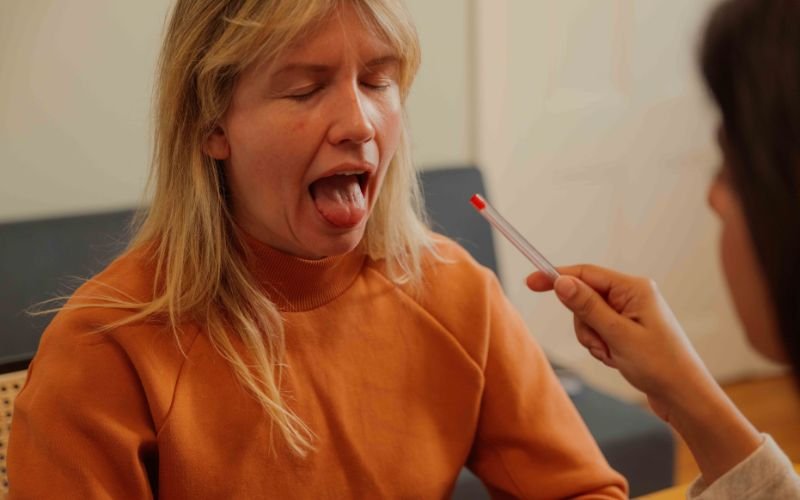
The classical Ashtavidha Pariksha (eightfold examination) guides the physical assessment. It includes reading your Nadi (pulse) and looking at your Jihva (tongue). I also note your voice, skin, eyes and general build. Each sign hints at which dosha is out of balance.

Prakriti and Vikriti
Your Prakriti is the constitution you were born with, and your Vikriti is your current state of imbalance. A Kapha-type person with spring congestion needs a different plan from a Pitta-type person with hot, itchy hives.
Working alongside medical testing
Ayurvedic assessment does not replace medical allergy testing. Skin prick tests and specific blood tests ordered by your GP or clinical immunologist are the reliable way to confirm what you react to, and I encourage every patient to have them. When both maps are on the table, your care becomes safer and more precise.
The Australian context
Living in Australia shapes your allergies in ways that Ayurvedic texts written in India could not foresee. Our seasons, pollens and regulations all matter when you plan your care.
1 out of 3 Australians are allergic to something
Few long-term health problems are spreading across Australia as quickly as allergies. An estimated 8.2 million Australians (30% of the population) live with allergies. Hay fever alone affects around one in four people. That figure has roughly doubled since 2007.
Allergies also start young. Around 10% of Australian infants have a food allergy, while hay fever peaks in the teenage and young adult years. So when you feel worn down by symptoms each season, the frustration you carry is shared by millions of households.
That shared experience is why many of my patients seek a broader view. They want relief today and also want to understand the pattern underneath.
Our seasons and Ritucharya
Ritucharya is the Ayurvedic practice of adjusting your routine to each season. In the southern hemisphere, spring runs from September to November. Ayurveda describes this time as when Kapha that built up over winter begins to melt and flow. That pattern matches the blocked noses and itchy eyes many Sydneysiders feel each spring.
Grass pollen and thunderstorm asthma
In Victoria, grass pollen fills the air between early October and the end of December. People with hay fever can be affected by thunderstorm asthma during that window. Melbourne’s 2016 event led to ten deaths, and in 2025 Victoria added six new automated pollen counters to its forecasting system. If you have hay fever, keep an up-to-date asthma or hay fever plan from your doctor and stay indoors during spring storms.
Practitioner standards and health cover
Ayurvedic practitioners are not registered with Ahpra, the national regulator for professions such as medicine and nursing. Instead, Ayurveda operates as a self-regulated profession under the National Code of Conduct for health care workers in most states and territories. Ask any practitioner about their qualifications and professional association membership before you begin.
Health cover is changing too. From July 1, 2025, seven natural therapies became eligible for private health insurance benefits again, including yoga and Western herbal medicine. Ayurveda was not on the list of 16 therapies excluded in 2019, so whether your extras policy covers a consultation depends on your fund.
Ayurvedic treatment for allergies
Ayurveda for allergies works on two levels: calming the symptoms you feel now and strengthening the systems that keep reactions in check. Every plan I write is personal because allergy treatment in Ayurveda depends on your constitution and triggers. None of it replaces medicines your doctor has prescribed.
Diet and digestion (Ahara)
Food is the first medicine in Ayurveda. During allergy season, I usually suggest warm, freshly cooked meals and lightly spiced soups. I also suggest cutting back on cold drinks, heavy dairy and late dinners, which Ayurveda sees as Kapha-building. Ginger, cumin, black pepper and turmeric are common kitchen spices traditionally used to support Agni.
Herbal support (Aushadhi)
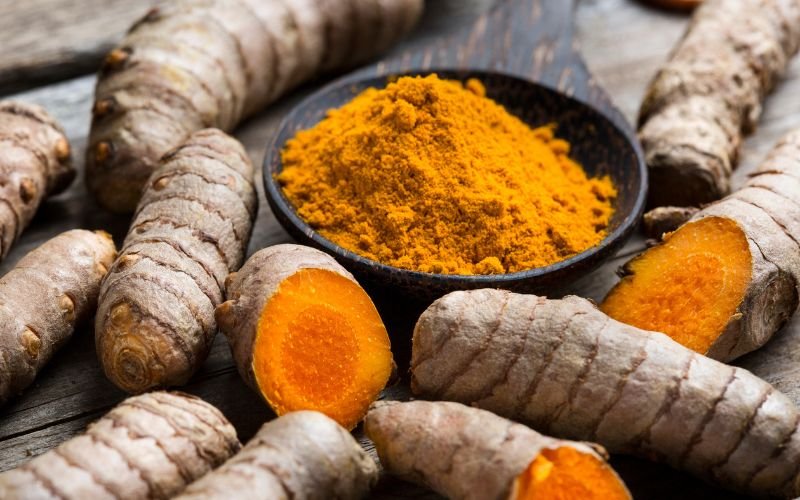
Ayurvedic remedies for allergies draw on a long list of herbs, and a few have early research behind them. Haridra (turmeric) and its active compound curcumin reduced inflammatory markers and nasal symptom scores in allergic rhinitis in a 2025 review of randomised trials. However, scientific reviewers called for larger studies, so I present turmeric as promising rather than proven.
Other herbs I may consider include the following, always chosen to suit your constitution and other medicines:
- Guduchi (Tinospora cordifolia): A classical Rasayana (rejuvenating) herb traditionally used to support immune balance.
- Tulsi (holy basil): Often taken as a warm tea for the throat and chest.
- Shirisha (Albizia lebbeck): Traditionally described in Ayurveda as an anti-allergic herb.
- Haridra Khanda: A classical turmeric-based formula commonly used for skin and nasal allergies.
Small Ayurvedic trials are adding to the picture. In a 2025 open-label trial of 240 adults, an Ayurvedic herbal jam (Avaleha) taken alone or with medicated ghee reduced nasal symptom scores over 28 days. No side effects were reported, but serum IgE did not change. Studies like this are encouraging, yet they are not large or blinded enough to guarantee results for you.
Nasal care: Nasya and saline rinsing
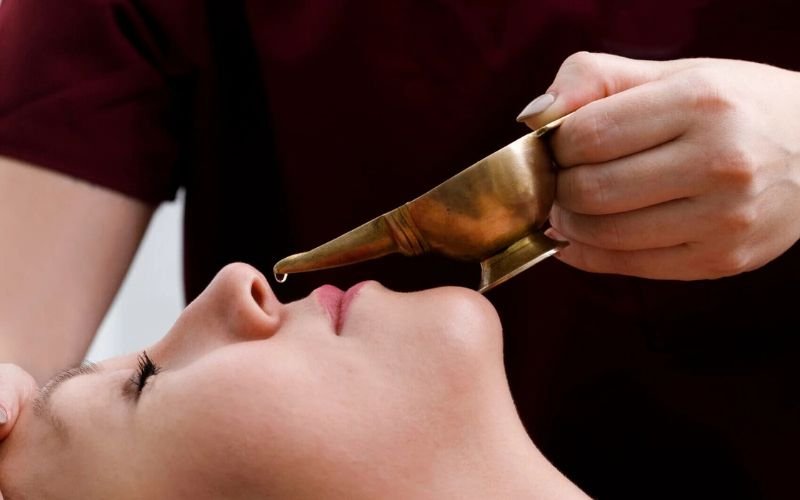
Nasya is the gentle application of medicated oil into the nostrils and holds a central place in Ayurvedic care for the nose and sinuses. A 2026 randomised trial reported symptom improvement in allergic rhinitis with Shunthyadi Taila Nasya, a ginger-based nasal oil. Like most Ayurvedic remedies for allergies, Nasya works best when a practitioner guides your first sessions and matches the oil and dose to you.
Jala Neti, the yogic saline rinse, sits comfortably alongside modern advice. When researchers pooled trials in 2025, rinsing with 3% hypertonic saline eased nasal symptoms and cut antihistamine use in adults and children with allergic rhinitis. Always use sterile or previously boiled and cooled water, and use the rinse before any prescribed nasal spray.
Panchakarma: deeper cleansing
Panchakarma is a set of five classical cleansing therapies, two commonly considered for allergies. Vamana (therapeutic emesis) is traditionally reserved for heavy Kapha conditions, and Virechana (gentle purgation) is often chosen for Pitta-type skin allergies such as hives. These are serious procedures that require a full assessment, preparation days and supervision, so they are never a do-it-yourself detox.
Yoga and pranayama
Breathwork can support how your nose and chest feel. A 2025 randomised study in older adults with allergic rhinitis found adding pranayama to laser acupuncture improved inflammatory markers more than acupuncture alone. I usually start patients on slow alternate-nostril breathing (Anulom Vilom) and avoid forceful techniques during a flare.
Practical self-care and prevention
Prevention is where Ayurveda for allergies feels most practical because small daily habits add up across a season. The routines below are gentle, low-cost and easy to fit around work and family.
What helps allergies naturally in daily life
If you are asking what helps allergies naturally, start with your daily rhythm. These steps form a simple Dinacharya (daily routine) for allergy season.
- Wake before sunrise when you can: Ayurveda considers early morning the lightest time of day and a good time for gentle movement.
- Rinse your nose after time outdoors: A saline rinse can clear pollen before it settles in your nasal passages.
- Sip warm water through the day: Warm fluids are traditionally used to keep mucus thin and Agni steady.
- Eat your main meal at lunchtime: Your digestion is considered strongest in the middle of the day.
- Wind down early: Restful sleep supports Ojas and helps your body recover from inflammation.
Seasonal preparation before spring
I encourage you to start preparing in late winter rather than waiting for the first sneeze. Lighten your diet in August and add more bitter greens and warming spices. Book any seasonal consultation or supervised cleansing before pollen counts climb in September.
Your home environment
House dust mites thrive in warm, humid coastal cities like Sydney, so your bedroom deserves extra attention. Wash bedding in hot water each week and keep indoor humidity low. Close your windows on windy spring days when grass pollen is in the air.
Stress and the mind
Ayurveda treats the mind and body as one system, so stress can worsen reactions in your skin and airways. A short daily practice of meditation, warm oil self-massage or a quiet walk can steady your nervous system. These habits will not stop an allergic reaction, but many of my patients find them helpful for coping through a hard season. That is the quiet strength of Ayurveda for allergies: it gives you something steady to do each day.
Knowing when to seek urgent help
Some symptoms are emergencies, and natural remedies have no place in managing them. Call triple zero (000) straight away if you or someone with you has swelling of the lips or tongue, difficulty breathing, wheezing that does not settle or feels faint after exposure to a trigger. If you carry an adrenaline injector, use it as your doctor has instructed and then call for help.
Bringing it all together
Allergy treatment in Ayurveda offers you a way to understand your symptoms as part of a bigger pattern of digestion, season, environment and mind. The research on herbs, Nasya and breathwork is still growing, so the safest path is an integrated one that keeps your GP or allergist involved. Used this way, an Ayurvedic treatment for allergies can sit comfortably beside the medicines that keep you safe.
If you would like a personalised plan, our team at Ayurvedic Wellness Centre in Bondi Junction is here to listen and to work alongside your medical care. Bring your allergy test results, a list of your current medicines and your questions, and we will build a gentle plan around you.
The first version of this article was published on Feb 27, 2016.
Sources
- Allergy rates climb, costing Australians $18.9 billion in financial losses – https://nationalallergycouncil.org.au/images/pics/nac_nace_media_release_web_version.pdf
- Costly Reactions: The economic and social cost of allergic disease in Australia – https://allergy.org.au/about-ascia/info-updates/costly-reactions-the-economic-and-social-cost-of-allergic-disease-in-australia
- An overview of Vyadhikshmatva (Immunity) in the promotion of health – https://jaims.in/jaims/article/view/3923
- The Consequences of Consuming Incompatible Foods: A Review of Virudh Ahara in Skin Diseases – https://jaims.in/jaims/article/view/4063
- Thunderstorm asthma (Better Health Channel fact sheet) – https://www.betterhealth.vic.gov.au/sites/default/files/2025-09/thunderstorm-asthma-fact-sheet-english.pdf
- Protecting Victorians From Thunderstorm Asthma – https://www.premier.vic.gov.au/protecting-victorians-thunderstorm-asthma-0
- Brahmi Vati tablets: An Ayurvedic medicine – https://www.tga.gov.au/safety/safety-monitoring-and-information/safety-alerts/brahmi-vati-tablets-ayurvedic-medicine
- Ayurvedic medicines containing lead, other heavy metals and scheduled poisons – https://www.health.vic.gov.au/health-advisories/ayurvedic-medicines-possibly-containing-scheduled-poisons-and-heavy-metals
- White Paper 1: The Australian Health Regulatory Framework – https://www.atms.com.au/wp-content/uploads/2025/07/White-Paper-1-The-Australian-Health-Regulatory-Framework.pdf
- Private Health Insurance Legislation Amendment Rules (No. 5) 2025: Explanatory Statement – https://www.legislation.gov.au/F2025L00707/asmade/2025-06-19/es/original/pdf
- The Conversation: These complementary therapies may soon be eligible for private health insurance rebates – https://scu.edu.au/news/2025/tc-complementary-therapies-and-health-rebates
- Effectiveness of using curcumin and bee honey for the treatment of allergic diseases: a systematic review of RCT’s – https://ir.lib.pdn.ac.lk/handle/20.500.14444/5834
- Curcumin and multiple health outcomes: critical umbrella review of intervention meta-analyses – https://www.frontiersin.org/articles/10.3389/fphar.2025.1601204/full
- Effectiveness of an Ayurvedic Formulation (Allergy Rakshak Avaleha) Alone and in Combination (with Allergy Rakshak Ghee) for Managing Allergic Rhinitis: An Open-label Randomized Controlled Study – https://www.ijapr.in/index.php/ijapr/article/view/3678
- Randomised Control Trial of Shunthyadi Tail Nasya in Bhrushakshava with Special Reference to Allergic Rhinitis – https://doi.org/10.47070/ijapr.v14i1.4004
- Efficacy of hypertonic saline nasal irrigation in allergic rhinitis: A systematic review and meta-analysis – https://doi.org/10.15586/aei.v53i5.1409
- Effect of adding pranayama yoga exercises to laser acupuncture on inflammatory markers in elderly with allergic rhinitis: A randomized controlled study – https://www.ejgm.co.uk/article/effect-of-adding-pranayama-yoga-exercises-to-laser-acupuncture-on-inflammatory-markers-in-elderly-16224