
Ayurveda for gut health starts with one simple idea: how well you digest shapes how well you feel. Ayurvedic practitioners look at your digestion as a whole story rather than a list of symptoms. This guide walks you through how we read that story and where the science stands today.
Your gut according to Ayurveda
Ayurveda sees your gut as the root of your health and judges it by the strength of your digestive fire (agni). When your agni burns steadily, you feel hungry at regular times and leave meals feeling light. When it weakens or flares, discomfort follows.
The four states of your digestive fire
Ayurveda describes four patterns of agni. Here is how each one shows up:
- Balanced fire (sama agni): Regular appetite, comfortable digestion and easy bowel movements. This is the state Ayurvedic gut health aims for.
- Irregular fire (vishama agni): Hunger comes and goes, with gas, bloating and alternating bowel habits. It is linked with Vata.
- Sharp fire (tikshna agni): Strong hunger, acidity and a tendency towards loose stools. It is linked with Pitta.
- Sluggish fire (manda agni): Low appetite, heaviness after meals and slow digestion. It is linked with Kapha.
Undigested residue and the three doshas
When agni falters, Ayurveda teaches that food is only partly processed and leaves behind a sticky residue (ama). Over time, ama is thought to block the body’s channels (srotas) and unsettle your three doshas.
Your doshas are Vata (air and space), Pitta (fire and water) and Kapha (earth and water). You are born with a natural blend called your constitution (prakriti), while your current imbalance is called your vikriti. That is why two people with the same bloating may receive different advice.
Where Ayurveda meets the microbiome
Modern research is starting to test these ideas through the gut microbiome. Herbs such as Triphala, turmeric and aloe vera may feed the friendly microbes in your gut, as a 2025 review of Ayurvedic herbs and gut microbiota shows. Early work also links each constitution type to distinct gut microbial profiles. These studies are small, so treat them as early signals.
Common gut complaints through an Ayurvedic lens
Most everyday gut complaints trace back to one or two doshas pulling your agni out of balance. Naming the pattern helps your practitioner choose the right foods and herbs.
Bloating and gas
Bloating (adhmana) is usually read as a Vata disturbance. Irregular meals, cold raw foods and stress all aggravate Vata and leave your belly tight and gassy.
Acid reflux and heartburn
Burning acidity (amlapitta) is a classic Pitta pattern. Spicy, sour and fried foods, alcohol and late dinners tend to feed it. Cooling foods and calmer meals form the foundation of care.
Constipation
Constipation (vibandha) is most often linked with dry, cold Vata qualities. Ayurveda leans on warm fluids, good-quality fats like ghee and fibre-rich foods to restore rhythm.
Loose stools
Loose stools (atisara) can reflect excess Pitta heat or a weakened agni after illness. Persistent diarrhoea always needs a medical check, especially if you see blood.
Irritable bowel syndrome
Ayurveda links irritable bowel syndrome most closely with a digestive disorder (grahani), involving weakened agni and disturbed Vata and Pitta. Ayurvedic gut health care for irritable bowel syndrome works best alongside your GP or gastroenterologist, never instead of them.
How gut concerns are diagnosed using Ayurvedic principles
An Ayurvedic practitioner diagnoses gut concerns through a detailed conversation and a traditional eightfold examination (ashtavidha pariksha). The goal is to understand your constitution, current imbalance and the state of your agni.
What your practitioner examines
These parts of the gentle, non-invasive examination matter most for your gut:
- Pulse reading (nadi pariksha): Your practitioner feels the quality and rhythm of your pulse at the wrist. It is read as a guide to which dosha is most active.
- Tongue examination (jihva pariksha): Coating, colour and cracks are noted. A thick coating is traditionally linked with ama.
- Stool examination (mala pariksha): You will be asked about the form, colour, smell and frequency of your bowel movements. It can feel awkward, but this detail is very useful.
- History and lifestyle: Your sleep, stress, meal timing and food choices are explored.
What to expect in your first consultation

Your first consultation usually includes a dosha assessment, the examination above and a review of any medical tests you bring. You leave with a personalised plan for diet and routine plus herbs or therapies where suitable. Ayurvedic assessment does not replace pathology, imaging or a colonoscopy, so please share your GP’s results with your Ayurvedic practitioner.
When to see your GP first
Book a GP visit if you notice any of the following:
- Blood in your stool or black, tarry stools
- Unexplained weight loss or persistent fatigue
- A change in bowel habits lasting more than a couple of weeks
- Ongoing abdominal pain, bloating or cramping
- Difficulty swallowing, persistent vomiting or a fever with gut pain
Ayurveda vs naturopathy vs Traditional Chinese Medicine for gut health
Ayurveda, naturopathy and Traditional Chinese Medicine all treat your gut as part of a whole-body system. They differ in theory, tools and regulation. Ayurveda reads digestion through agni and the doshas. Traditional Chinese Medicine reads it through the Spleen and Stomach systems and the flow of qi, while naturopathy draws on nutrition and herbal medicine.
Regulation is one of the clearest differences in Australia. Chinese medicine practitioners are nationally registered, and the Chinese Medicine Board of Australia applies accreditation standards for Chinese medicine training programs that took effect on January 1, 2026. Ayurvedic practitioners and naturopaths sit outside national registration and rely on professional associations. In most states and territories, they must also follow the National Code of Conduct for unregistered health practitioners, which forbids practitioners from overstating what a treatment can do for you.
The government restored private health insurance rebates for seven natural therapies in April 2025, including naturopathy and Western herbal medicine. Those therapies became eligible again from July 1, 2025, although each insurer decides its own cover. Ayurveda was never on the 2019 list of excluded natural therapies, so whether your extras cover it depends on your fund and policy.
Pooling 14 trials in 2025, researchers saw people with irritable bowel syndrome report milder symptoms after acupuncture, though pain scores alone did not shift. Ayurvedic research is younger and mostly smaller in scale.
Ayurvedic medicine for gut health
Ayurvedic medicine for gut health uses herbal powders (churnas), tablets (vatis) and medicated ghees to rekindle agni and clear ama. Your practitioner chooses them based on your dosha pattern, symptoms and the season.
Classical formulas you may hear about
A few classical formulations come up often in digestive care. Each has a traditional role:
- Triphala: A blend of amalaki, bibhitaki and haritaki fruits. It is traditionally used to support regular bowel movements.
- Hingvashtak churna: A spice blend built around asafoetida (hing). It is traditionally taken with the first mouthfuls of a meal for gas and poor appetite.
- Avipattikar churna: A cooling formula traditionally used for Pitta-type acidity.
Before taking any Ayurvedic medicine for gut health, look for an AUST L or AUST R number on the label. If a product lacks both, stop using it and seek medical advice.
Lifestyle and daily routines to improve gut health
A steady daily routine (dinacharya) is the quiet engine of Ayurvedic gut health. Your gut thrives on rhythm, and regular habits often help more than any single herb.
A simple morning and evening rhythm
Start with two or three of these habits and then build from there:
- Wake at a consistent time: Rising before or around sunrise suits most constitutions. A regular wake time helps set your appetite clock.
- Scrape your tongue: Use a stainless steel or copper scraper before brushing. It clears the morning coating and lets you notice changes.
- Sip warm water: Ayurveda traditionally uses a cup of warm water on waking to encourage a morning bowel movement.
- Eat at regular times: Keep breakfast, lunch and dinner at roughly the same times each day. Your gut microbes follow a daily rhythm that meal timing may influence.
- Take a short walk after meals: Ayurveda traditionally recommends a hundred gentle steps after eating. It is a habit to try after lunch and dinner.
- Finish dinner early: Aim to eat at least two to three hours before bed so your stomach can settle.
Yoga, breathwork and stress
Your gut and mind are tightly connected, so calming your nervous system is part of Ayurvedic gut care. Gentle twists, wind-relieving pose (pawanmuktasana) and slow breathwork (pranayama) are highly recommended. Yoga is generally safe and calming, so treat it as a supportive habit rather than a stand-alone treatment.
Self-massage and seasonal routines
A warm oil massage (abhyanga) of your abdomen, done in slow clockwise circles, is a soothing Vata-calming ritual. Ayurveda also adjusts your routine with the seasons (ritucharya). In Australia, remember seasons are reversed, so the classical “Pitta season” of high summer falls in December to February.
Ayurvedic herbs for gut health
Ayurvedic herbs for gut health range from kitchen spices to classical formulas, and several have early scientific support. None of them replaces medical care.
Triphala
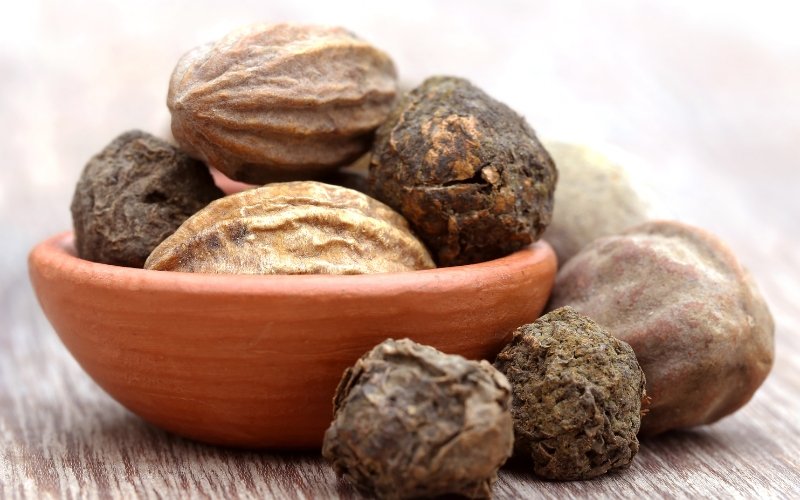
Triphala is the best-known Ayurvedic herb blend for digestion. Research suggests it may encourage beneficial gut bacteria. How Triphala changes your gut microbiome remains an open question, and well-designed studies in people are still to come. Avoid Triphala in pregnancy and during active diarrhoea unless your practitioner advises otherwise.
Ginger
Fresh ginger (ardraka) and dried ginger (shunthi) are prized for kindling agni and easing nausea. A 2025 review of ginger and gastrointestinal health found ginger tended to ease indigestion and bowel complaints, though the studies were few and varied. Talk to your GP before taking concentrated ginger if you use blood-thinning medicine.
Turmeric
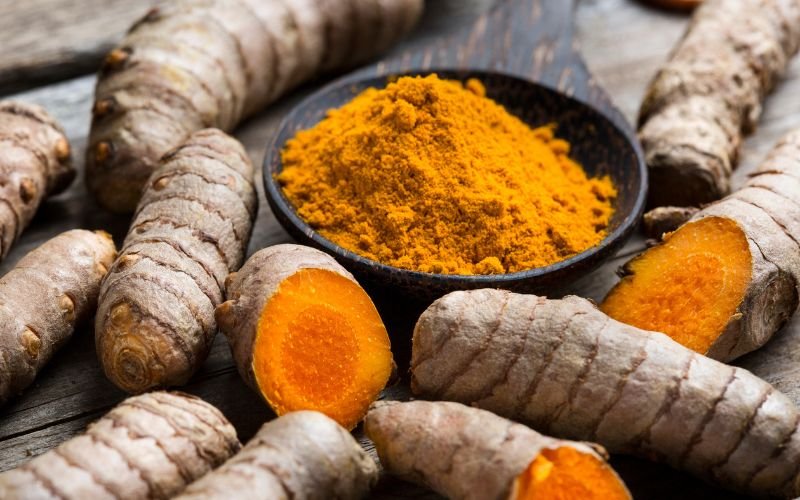
Turmeric (haridra) is valued in Ayurveda for its warming, cleansing nature. A 2025 meta-analysis of curcumin in inflammatory bowel disease found benefits in ulcerative colitis but not Crohn’s disease. If you live with inflammatory bowel disease, discuss turmeric supplements with your gastroenterologist before you start.
Cumin, coriander and fennel
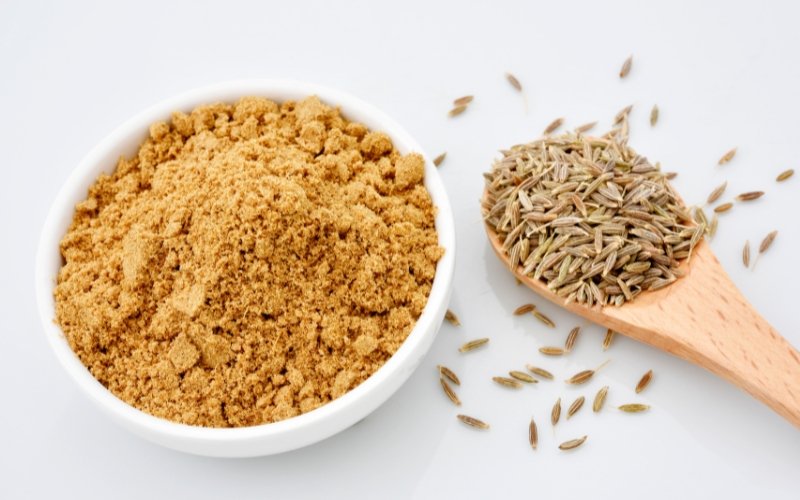
Cumin is traditionally used to warm a sluggish fire, coriander to cool excess heat and fennel to ease gas. Together they suit almost every constitution.
Other helpful herbs and spices
A few more herbs have a traditional place in Ayurvedic gut care. Each one needs care in specific situations:
- Asafoetida (hing): A pinch in cooking is traditionally used to reduce gas from lentils and beans.
- Licorice (yashtimadhu): Traditionally used for Pitta-type acidity. Avoid long-term use, and skip it in pregnancy or if you have high blood pressure.
- Psyllium husk (isabgol): A bulk-forming fibre for both constipation and loose stools. Take it with plenty of water.
Eating habits and Ayurvedic recipes for gut health
How you eat matters as much as what you eat in Ayurveda. Calm, regular meals of warm food give your agni the best chance to work well.
Eating habits that support your agni
Small changes at the table can make a real difference. Try these for two weeks:
- Sit down to eat: Eating on the run unsettles Vata and invites bloating.
- Make lunch your main meal: Ayurveda teaches that your digestive fire peaks around midday.
- Favour warm, cooked food: Soups, stews and steamed vegetables are easier on a sensitive gut than cold salads.
- Chew slowly and stop before you are full: Leave roughly a quarter of your stomach empty.
- Avoid incompatible food combinations (viruddha ahara): Ayurveda warns against pairings such as fruit with milk.
Whether clashing pairings upset your gut bacteria is still under investigation rather than a proven fact.
Developed at Monash University, the low FODMAP diet helps 50 to 80 percent of people with irritable bowel syndrome ease their symptoms. If you follow a low FODMAP diet, Ayurvedic eating can sit alongside it. Garlic, onion and some legumes are high in FODMAPs, so check your portions with an Accredited Practising Dietitian or the Monash FODMAP app.
Cumin, coriander and fennel tea
This mild tea is one of the simplest Ayurvedic recipes for gut health, and it suits all three doshas.
- Add half a teaspoon each of whole cumin, coriander and fennel seeds to 1 litre of water.
- Simmer for 5 to 10 minutes, then strain into a flask.
- Sip it warm through the day, especially after meals.
Simple kitchari
Kitchari is a soft rice and lentil porridge, and it is a staple among Ayurvedic recipes for gut health because it is gentle and easy to digest.
- Rinse half a cup of white basmati rice and half a cup of split yellow mung dal until the water runs clear.
- Warm 1 tablespoon of ghee in a pot and add 1 teaspoon of cumin seeds and a pinch of hing.
- Stir in 1 teaspoon of grated ginger and half a teaspoon of turmeric.
- Add the rice, dal and 5 cups of water, then simmer for 30 to 40 minutes until soft.
- Add diced zucchini or carrot halfway through, then season to taste.
Ayurvedic treatment for gut health
Ayurvedic treatment for gut health is personalised and usually moves in stages from gentle daily changes to deeper therapies if needed. Your plan starts with diet and routine, then adds herbs or hands-on treatments where they suit you.
Therapies we may recommend
These hands-on treatments are the most relevant to digestion:
- Abhyanga: A full-body Indian massage that calms Vata. It is deeply relaxing, which can help when stress affects your gut.
- Shirodhara: A steady stream of warm oil poured over the forehead. It is used for stress and poor sleep, which often sit behind digestive flare-ups.
Panchakarma and deeper cleansing
Panchakarma is Ayurveda’s five-part cleansing program, including therapeutic purgation (virechana) and medicated enemas (basti). At Ayurvedic Wellness Centre, Panchakarma is only offered after a full assessment by one of our Ayurvedic practitioners. It is not suitable during pregnancy, acute illness, or if you are frail or underweight.
How long Ayurvedic treatment for gut health takes
Every gut is different, so we never promise a fixed timeline. Long-standing concerns usually need a few months of consistent care and regular reviews.
Working alongside your medical team
The safest Ayurvedic treatment for gut health works hand in hand with conventional care. Keep taking prescribed medicine and tell your GP and pharmacist about every herb you use.
Taking your next step
Ayurveda for gut health is less about quick fixes and more about learning your body’s rhythm. Start with one change this week, perhaps cumin, coriander and fennel tea or an earlier dinner. If you would like a plan built around your constitution, book a consultation at our Bondi Junction clinic.
The first version of this article was published on Jul 4, 2020.
Disclosure: This article is general information and is not a substitute for medical advice. Talk to your doctor before starting any herb, especially if you take prescription medicines or have a health condition.
Sources
- Global Traditional Medicine Strategy 2025-2034 (WHO Global Traditional Medicine Centre) – https://www.who.int/teams/who-global-traditional-medicine-centre/traditional-medicine-strategy-2025-2034
- The role of gut microbiota in disease management: Ayurvedic perspectives on metabolic diseases and health (Phytomedicine Plus, 2025) – https://doaj.org/article/39a9a6ce225f454c8cff33e357f0df27
- Decoding gut microbiome diversity through Prakriti: Insights from an Ayurgenomics perspective: A narrative review (University of Colombo, 2025) – https://archive.cmb.ac.lk/handle/70130/8314
- Young people encouraged to test for bowel cancer (North Metropolitan Health Service, 2025) – https://nmhs.health.wa.gov.au/News/2025/11/19/bowel-cancer
- Chinese Medicine Board of Australia – Accreditation – https://www.chinesemedicineboard.gov.au/Accreditation.aspx
- The National Code of Conduct for Unregistered Health Practitioners (Australian Traditional Medicine Society, 2025) – https://www.atms.com.au/wp-content/uploads/2025/11/White-Paper-2-National-Code-of-Conduct.pdf
- Natural Therapies Review 2024 (Australian Government Department of Health, Disability and Ageing) – https://www.health.gov.au/topics/private-health-insurance/reforms/natural-therapies-review
- Private health insurance rebates restored for natural therapies: a win for patient choice and evidence-based care (Southern Cross University, 2025) – https://www.scu.edu.au/news/2025/private-health-insurance-rebates-restored-for-natural-therapies/
- Member Update: Natural Therapies Reinstated for Private Health Insurance Rebates from July 1, 2025 (Australian Traditional Medicine Society) – https://www.atms.com.au/member-update-natural-therapies-reinstated-for-private-health-insurance-rebates-from-1-july-2025/
- The effect of acupuncture on quality of life in patients with irritable bowel syndrome: A systematic review and meta-analysis (PLOS ONE, 2025) – https://pubmed.ncbi.nlm.nih.gov/39946356/
- Imported Ayurvedic products found to contain dangerous heavy metals (Therapeutic Goods Administration) – https://www.tga.gov.au/safety/safety-alerts/imported-ayurvedic-products-found-contain-dangerous-heavy-metals
- Ayurvedic medicines containing lead, other heavy metals and scheduled poisons (Victorian Department of Health, 2025) – https://www.health.vic.gov.au/health-advisories/ayurvedic-medicines-possibly-containing-scheduled-poisons-and-heavy-metals
- Therapeutic Goods (Permissible Indications) Determination (No. 1) 2025 (Federal Register of Legislation) – https://www.legislation.gov.au/F2025L00450/asmade/text
- Effects of Time-Restricted Eating (Early and Late) Combined with Energy Restriction vs. Energy Restriction Alone on the Gut Microbiome in Adults with Obesity (Nutrients, 2025) – https://www.mdpi.com/2072-6643/17/14/2284
- The Effectiveness of Yoga for Irritable Bowel Syndrome: A Systematic Review (Comprehensive Physiology, 2025) – https://pubmed.ncbi.nlm.nih.gov/41108584/
- Yoga for Irritable Bowel Syndrome: A Systematic Review and Meta-Analysis of Randomized Controlled Trials (American Journal of Gastroenterology, 2025) – https://pubmed.ncbi.nlm.nih.gov/40358469/
- The interplay of triphala and its constituents with respect to metabolic disorders and gut-microbiome (Fitoterapia, 2025) – https://pubmed.ncbi.nlm.nih.gov/40466870/
- Ginger’s nutritional implication on gastrointestinal health (Clinical Nutrition Open Science, 2025) – https://www.sciencedirect.com/science/article/pii/S2667268525000233
- Curcumin for the clinical treatment of inflammatory bowel diseases: a systematic review and meta-analysis of placebo-controlled randomized clinical trials (Frontiers in Nutrition, 2025) – https://www.frontiersin.org/journals/nutrition/articles/10.3389/fnut.2025.1494351/full
- Effect of Viruddha Ahara on the Gut Microbiota – A Review (Journal of Ayurveda and Integrated Medical Sciences, 2025) – https://jaims.in/jaims/article/view/4735/
- 20 Years of FODMAP: The Monash discovery that revolutionised IBS care (Monash Lens, 2025) – https://lens.monash.edu/@medicine-health/2025/09/10/1387818/20-years-of-fodmap-the-monash-discovery-that-revolutionised-ibs-care