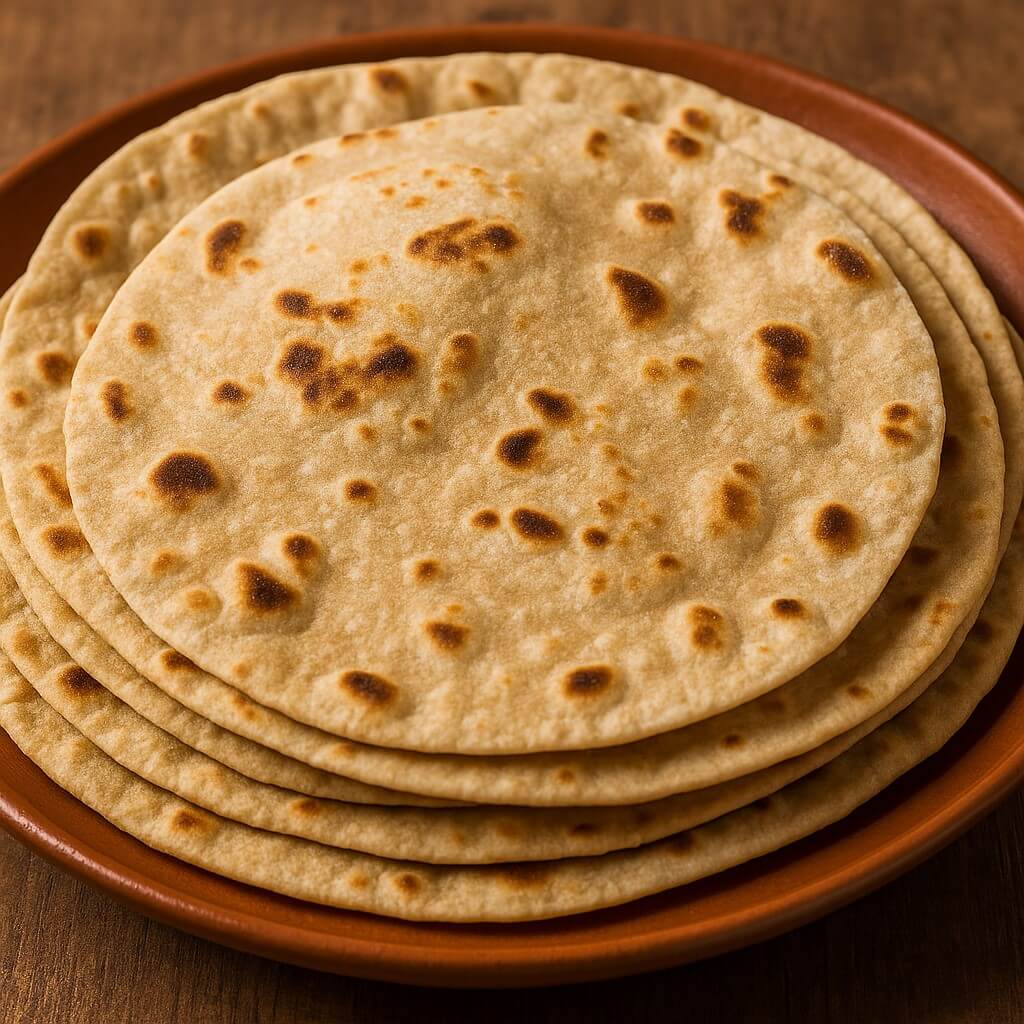
Why Chapatis Are Loved in Ayurveda
Chapatis are traditionally made from whole wheat flour, or atta, which contains all three parts of the grain—bran, germ, and endosperm. This makes it far more nutritious than refined flours. Ayurveda regards wheat as a sattvic food, promoting clarity, stability, and strength.
Chapatis are considered tridoshic, meaning they balance all three doshas when consumed in moderation:
- For Vata, they are grounding and hydrating.
- For Pitta, they are cooling and light.
- For Kapha, they are dry and light enough to support digestion.
According to Ayurvedic wisdom, even the act of kneading the dough is seen as a light physical workout that stimulates the muscles of the chest, arms, and stomach. So, the process of making chapatis is as beneficial as eating them!
Ayurvedic Chapati Ingredients
To keep this recipe Ayurvedic and nourishing, it’s important to start with high-quality, fresh ingredients. Here’s what you’ll need:
Basic Ingredients
- 2 cups of filtered whole wheat flour or atta (available at Indian grocery stores)
- 2/3 cup of lukewarm water
- ½ teaspoon of salt
- A small amount of ghee (clarified butter) for cooking
Optional Add-ins (Based on Dosha Needs)
- Coriander leaves (cooling and digestive)
- Fennel seeds (soothing for Pitta and aids digestion)
- Mint leaves (refreshing and calming)
- Green chilies (stimulating, great for Kapha)
How to Make Ayurvedic Chapatis
This recipe makes about 8 medium-sized chapatis.
- Mix the Dough
In a mixing bowl, combine the whole wheat flour and salt. Slowly add in the lukewarm water while stirring with your hand or a spoon. Continue adding water gradually as needed until the mixture forms a moist dough.
🌀 Ayurvedic Tip: The energy with which you cook matters. Approach the process with presence and gratitude—this will enhance the sattvic (harmonizing) quality of the food.
- Knead the Dough
Knead the dough well for at least 7 minutes. This helps develop the gluten and makes the chapatis soft and pliable. If the dough sticks to your fingers, sprinkle a little flour to help. You’re aiming for a smooth and elastic texture.
- Let It Rest
Cover the dough with a slightly damp cloth or paper towel and let it rest for 30 minutes to 2 hours. This allows the flour to absorb the water fully, making it easier to roll out.
- Roll Out the Chapatis
Divide the rested dough into small balls (about the size of a golf ball). Using a rolling pin, flatten each ball into a thin circle about 6 inches wide. Dust with flour as needed to prevent sticking.
Avoid stacking rolled chapatis, as they may stick to one another.
- Cook the Chapatis
Warm a non-stick pan or tava over medium heat. Lightly grease the surface with ghee.
Place a rolled chapati on the hot pan and cook until small white bubbles appear on the surface. Flip and cook the other side for another 1–2 minutes. Flip again until both sides develop golden brown spots.
Avoid high heat, which can burn the chapatis before they cook through.
- Serve Warm
Serve hot off the pan with:
- A drizzle of ghee for Vata and Pitta types
- A spoonful of raw honey (never cook honey!) for breakfast
- Alongside a light vegetable curry or lentil soup
Chapatis can also be used as sandwich wraps or cut into strips for dipping into soup or hummus.
Ayurvedic Customizations Based on Dosha
For Vata
- Add ghee or sesame oil to the dough for moisture.
- Serve with warming spices like cumin or ajwain.
- Pair with soups and stews to aid digestion.
For Pitta
- Use cooling herbs like mint, fennel, or cilantro.
- Avoid spicy add-ins like chilies.
- Pair with cooling foods like cucumber raita.
For Kapha
- Minimize or avoid ghee.
- Add warming spices like ginger or black pepper.
- Pair with steamed vegetables or light broths.
Why Chapatis Are Tridoshic
The beauty of this Ayurvedic chapati recipe lies in its simplicity and versatility. The base (whole wheat flour and water) is neutral and balancing. Depending on your prakriti (unique constitution) or vikriti (current imbalance), you can add herbs and spices that shift its effect toward what your body needs most at that time⁽¹⁾.
FAQs: Ayurvedic Chapati Recipe
Can I use gluten-free flour for chapatis?
Yes, you can try using spelt, millet, or buckwheat flour, but they won’t have the same pliability. Adding a binding agent like psyllium husk can help. Gluten adds softness and stretch, so results may vary.
How do I store leftover chapatis?
Wrap in a cloth or store in an airtight container. Reheat on a dry pan. They can be refrigerated for up to 2 days but are best enjoyed fresh.
Are chapatis better than rice in Ayurveda?
It depends on your dosha and digestive capacity. Chapatis are lighter and drier, suitable for Kapha. Rice is softer and heavier, better for Vata and Pitta. Both have their place in a balanced Ayurvedic diet⁽²⁾.
Can I eat chapatis for dinner?
Yes, especially when paired with light, cooked vegetables or soup. Avoid eating chapatis late at night if you have weak digestion.
Why is kneading considered beneficial in Ayurveda?
Kneading is a mindful, rhythmic movement that engages the chest, arms, and core muscles. It brings awareness to the body, stimulates circulation, and even calms the nervous system through tactile connection⁽³⁾.
Ayurvedic cooking isn’t just about ingredients—it’s about intention, attention, and alignment with the natural rhythms of the body. This chapati recipe is more than just a method to make flatbread. It’s a practice in mindfulness, nourishment, and holistic health.
So the next time you roll out a warm chapati, remember: you’re feeding not just your body, but also your mind and soul.
Footnotes
- Lad, Vasant. Ayurveda: The Science of Self-Healing. Lotus Press, 1984.
- Pole, Sebastian. Ayurveda: Medicine for the Mind, Body and Spirit. Duncan Baird Publishers, 2013.
- Svoboda, Robert. Prakriti: Your Ayurvedic Constitution. Lotus Press, 1998.